The administration of an estate is an essential legal process that takes place following a person’s death. It serves to organise the transfer of the deceased’s assets to their heirs, in compliance with the rules of civil law and international law. Whether the estate is straightforward or involves several Member States of the European Union, each stage is governed by specific legal principles laid down by law.
In this article, you will gain a detailed understanding of how an estate is administered, the applicable rules, the role of the notaire, as well as the particular features relating to international successions and the EU Regulation.
How Does an Estate Proceed Following a Death?
The administration of an estate begins on the day of death. This moment is crucial, as it determines, in particular, the law applicable to the entire succession.
Once the death certificate has been issued, the estate is legally opened. The notaire then becomes involved to organise the initial steps. They will identify the heirs, assess the deceased’s situation, and ascertain whether any arrangements were made during their lifetime, such as a will.
The determination of heirs is governed by civil law. In the absence of a will, national law provides a strict order of priority among those entitled to inherit. The spouse, children, and other family members may be concerned depending on the circumstances. Heirs therefore acquire rights, but also obligations, particularly with regard to the deceased’s debts.

Once the heirs have been identified, the notaire draws up an inventory of the assets. This stage provides a clear overview of the entire estate. Assets may be located in France or abroad, which is common in international successions.
A key stage then follows: acceptance or renunciation. Each heir must make a decision. Acceptance may be absolute or limited, whereas renunciation means that the individual relinquishes their rights in the estate. This choice carries significant legal weight and has important consequences.
Finally, the distribution of the estate takes place. It may be carried out amicably if the heirs agree, or through court proceedings in the event of disputes. The notaire then prepares the necessary authentic instruments to formalise the division.
The Central Role of the Notaire in Probate and Estate Administration
In the vast majority of cases, notaires play a central role in probate and estate administration. Their involvement is essential to ensure the legal security of all transactions.
The notaire becomes involved from the moment the estate is opened. They assist the heirs, verify documents, prepare the necessary instruments, and ensure the proper application of the law. They may also issue certificates, in particular a certificate of inheritance, which serves as proof of a person’s status as an heir.
In a European context, the European Certificate of Succession is of particular importance. This document facilitates formalities in another Member State and enables heirs to assert their rights without having to initiate complex procedures in each country.
The notaire also ensures the validity and compliance of authentic instruments. These instruments carry significant legal weight and are recognised across several Member States of the European Union.
Which Law Applies to an Estate?
The question of the applicable law is central to any succession. In private international law, this determination can be complex, particularly where international elements are involved.
The principle laid down by the EU Regulation is straightforward: the applicable law is that of the deceased’s habitual residence at the time of death. This rule ensures a unified approach to the administration of the estate, even where assets are located in several States.
However, there is an important exception: the choice of law. During their lifetime, the deceased may elect for the law of their nationality to govern their estate. This choice must be clearly expressed, generally in a will.
The choice of law may relate to the law of a Member State or even that of a third country. This makes it possible to anticipate conflicts and to secure the transfer of assets.
In the absence of such a choice, the law of the deceased’s last habitual residence applies automatically. This rule forms part of a broader European approach aimed at simplifying international successions.
Specific Aspects of Probate and Estate Administration
Certain estates present particular features that require special attention.
This is notably the case where the deceased owned assets abroad. In such circumstances, the notion of the deceased’s habitual residence becomes decisive. It determines both the applicable law and the competent jurisdiction.
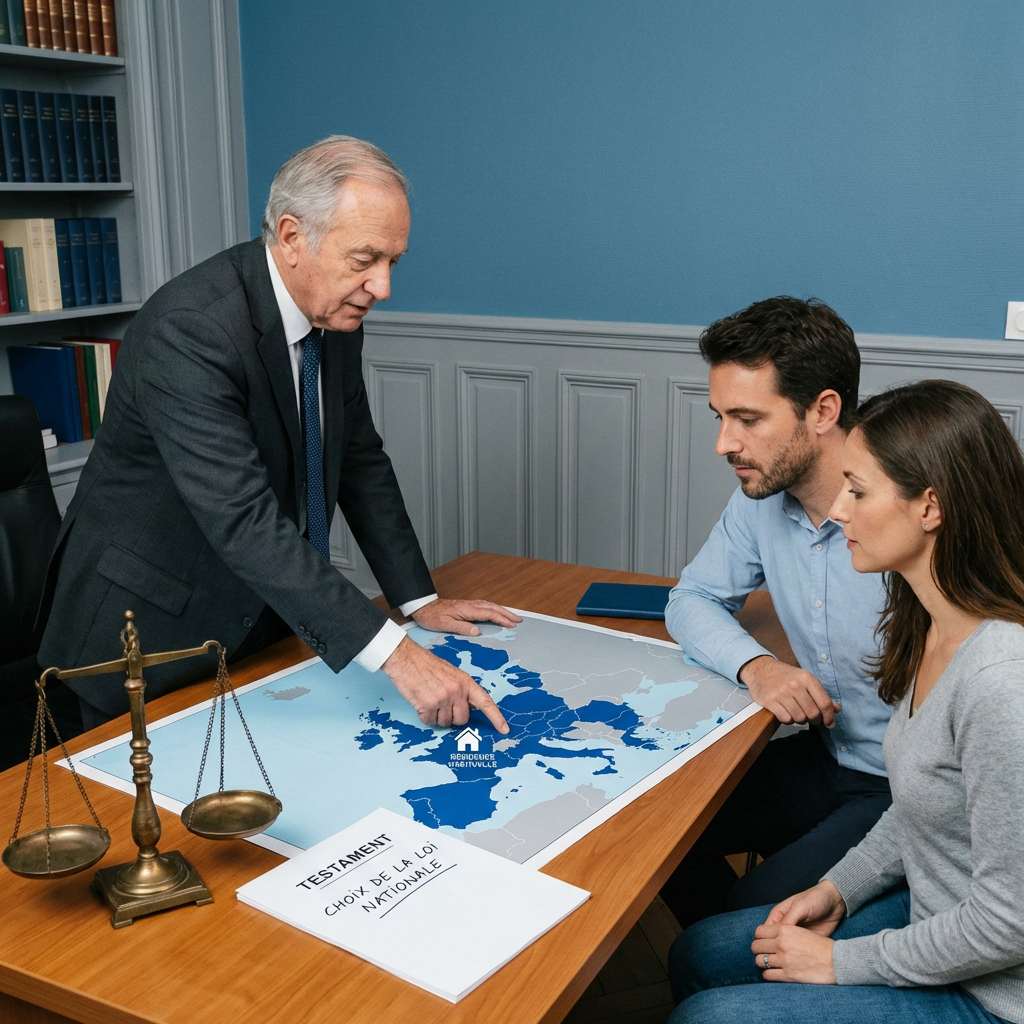
International successions often involve several Member States, or even third countries. This requires coordination between different legal systems and a sound understanding of private international law.
The effects of the European Regulation are significant. It helps to avoid conflicts between national laws, reduce delays, and safeguard the rights of heirs.
However, certain exceptions remain. Some countries, such as the United Kingdom and Ireland, do not fully participate in this framework, which may complicate certain situations.
The Rights and Obligations of Heirs
Heirs benefit from significant rights within the framework of a succession, but they also bear certain responsibilities.
They are entitled to receive their share of the estate in accordance with statutory provisions or the terms of a will. They may also challenge certain decisions in the event of a dispute.
However, they are also liable for the deceased’s debts, unless they renounce the succession. Accepting an estate therefore requires a careful assessment of the situation.
Each heir must make an informed decision, taking into account their own interests and any potential risks.
Conclusion: a Structured yet Complex Legal Framework
Probate and estate administration are governed by a set of precise legal rules derived from both civil law and international law. Between determining the applicable law, the role of notaires, the available choices, and the effects of the EU Regulation, successions can quickly become complex.
Understanding these mechanisms makes it possible to anticipate issues, secure the transfer of assets, and avoid disputes between heirs or between States.